There are many devices that are called gaming devices, but among them, one of the elements that has a large influence on actual play is the monitor.
Because a monitor shows images frame by frame in very short time intervals, its quality directly affects what the player sees. From a gamer’s point of view, visibility often becomes one of the most important factors.
Being able to clearly see what is happening on the screen is closely related to gameplay.
Why Do Monitor Features Look So Impressive on Paper?
For this reason, modern gaming monitors include many image-related functions. Some are easy to understand, while others are difficult to judge unless they are actually used.
Many of these modern monitor functions are listed in specifications and product descriptions, and at first glance, they appear very impressive. Panels and features can look nearly identical on paper, but the real differences often come down to brightness and how the image is actually displayed rather than dramatic changes in image quality.
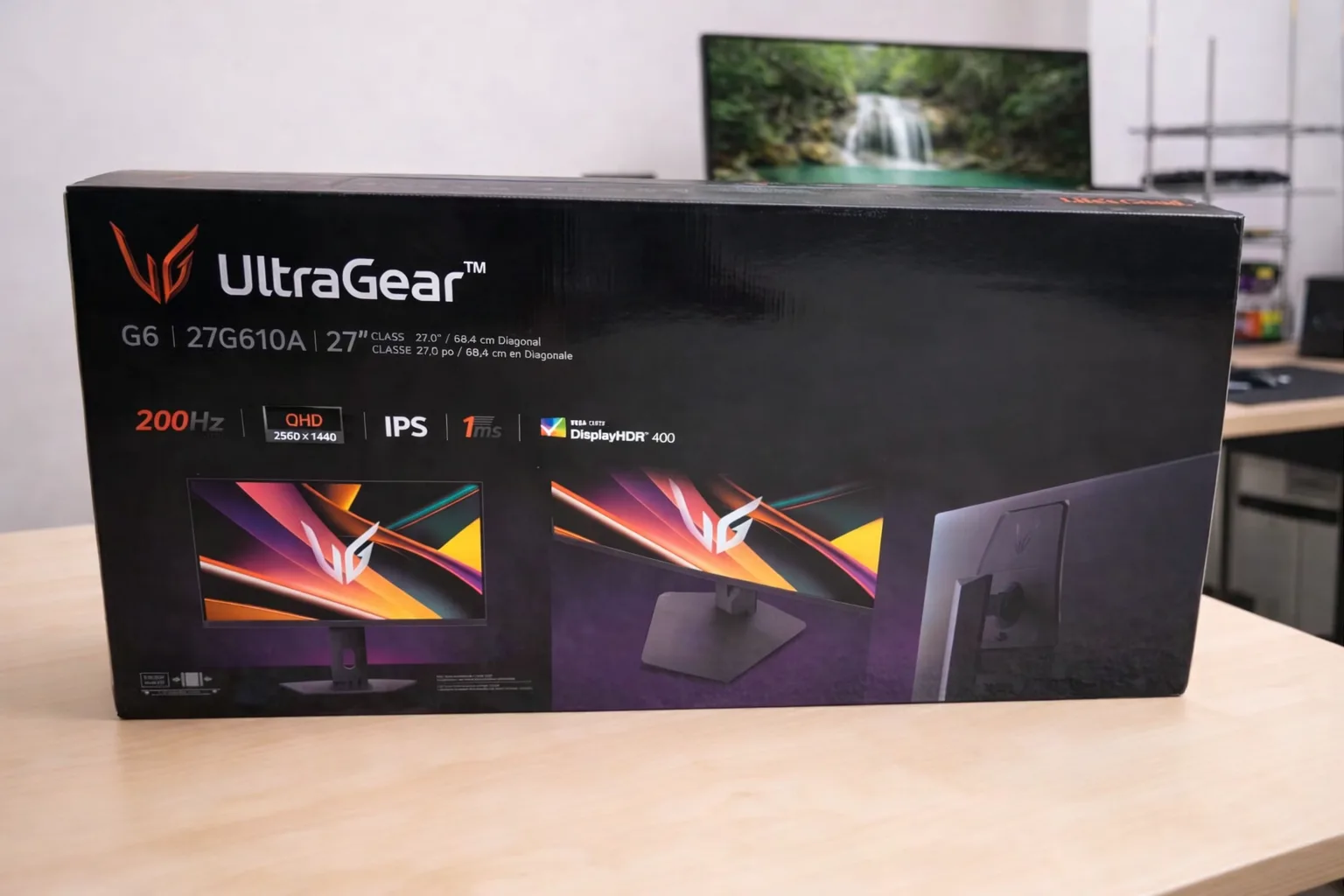
Because of this, marketing descriptions tend to focus on numbers and feature names instead of how the monitor feels during everyday use. In reality, image display always faces limitations. Image quality can change depending on the device, the panel, and how the monitor is used.
Some functions do not stand out in specifications and are easy to overlook, yet depending on the game or content, they can become useful. Others appear important on paper but become less noticeable over time.
How Did I Actually Use These Features?
Even if it is not the flashiest gaming monitor, a monitor is often used in everyday situations such as gaming, desktop work, browsing, and watching streaming content. This represents the most common use case.
At 27 inches, the monitor does not feel overly large or heavy, and the stand does not take up much desk space. The screen can be raised or lowered, tilted forward or backward, and swiveled left and right, making it easy to find a comfortable position.
Users can work or watch content from almost any angle while still seeing natural and accurate colors. The matte screen coating helps reduce reflections and makes long work sessions and gaming nights more comfortable.
Games and streaming content both look excellent on a high-quality display. Colors appear distinct and vibrant, small details remain visible, and the image stays stable even when viewed from the side.
Brightness does not need to be pushed aggressively for indoor use, and picture quality and smooth motion help offset limitations.
Which Features Did I Notice Right Away?
A high refresh rate combined with fast response time keeps the image smooth during use. Motion remains clear and easy to follow, even during fast-moving scenes.
For many users, 27 inches paired with a high refresh rate feels like a sweet spot. Resolution also plays an important role, as higher resolution complements a 27-inch display by providing sharp details and readable text without requiring scaling.
The image looks clean, text remains sharp, and small details stand out clearly in both games and everyday tasks. Color consistency is also noticeable, with colors appearing uniform across the screen and remaining stable when viewed from different angles.
These are features that are felt immediately and do not require explanation.
Which Ones Faded Into the Background?
Some features stand out at first but become less noticeable over time. Curvature is one example. After extended use, the curved monitor shape begins to feel normal and stops drawing attention to itself.
Gaming image enhancements fall into a similar category. Functions designed to improve visibility in dark scenes, such as Black Stabilizer and Shadow Boost, can be useful depending on the game.
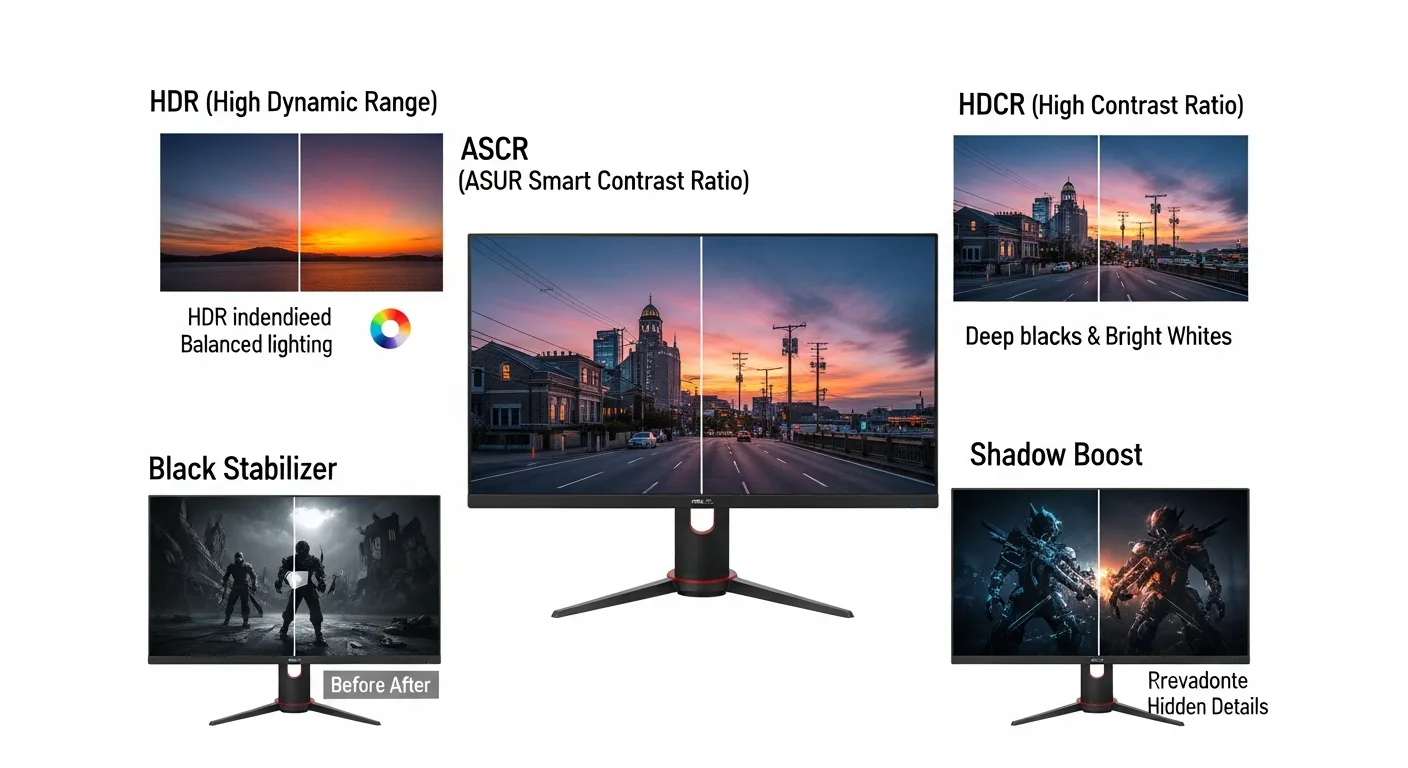 They usually offer several levels of adjustment. While helpful, these settings are often adjusted once and then left unchanged, especially when dynamic contrast features like HDCR are enabled. Over time, they fade into the background unless pushed too far, at which point contrast can be reduced and the image may appear flatter.
Vendor-specific features also behave this way. Different manufacturers use different names, but the goal is similar, and after a while the result matters more than the label.
When Didn’t the Specs Match How the Monitor Felt?
Specifications often list very impressive numbers, especially when it comes to response time. With the introduction of overdrive technology, response speed evaluation has become more complex.
In real-world use, these differences are not always easy to notice. Motion may feel smooth, but not necessarily because of a single number. Panel type also plays a role.
IPS panels offer accurate colors and wide viewing angles, while VA panels provide deeper blacks and higher contrast. Each panel type has its own limitations, and these characteristics affect how the image feels during extended use.
What Ended Up Mattering More Than Features?
Image quality and contrast become more noticeable over time. VA panels can block backlight more effectively in dark scenes, allowing darker areas to appear deeper and more separated.
At the same time, image stability and color consistency remain important. The image stays clean and consistent even when viewed from the side.
Two monitors with similar specifications can behave very differently depending on how the panel is driven and how image processing, such as ASCR, is applied.
So, Do Monitor Technologies Really Help?
Some features genuinely improve visibility in dark scenes, while others are barely noticeable unless they are actively used. Black Stabilizer and Shadow Boost can be effective when adjusted correctly for specific games.
Many features appear important in specifications but fade during real-world use.
In the end, what matters most is how the image looks and feels during everyday use and gaming.
